
REVIEW · KATHMANDU
White Water River Rafting – 1 Day
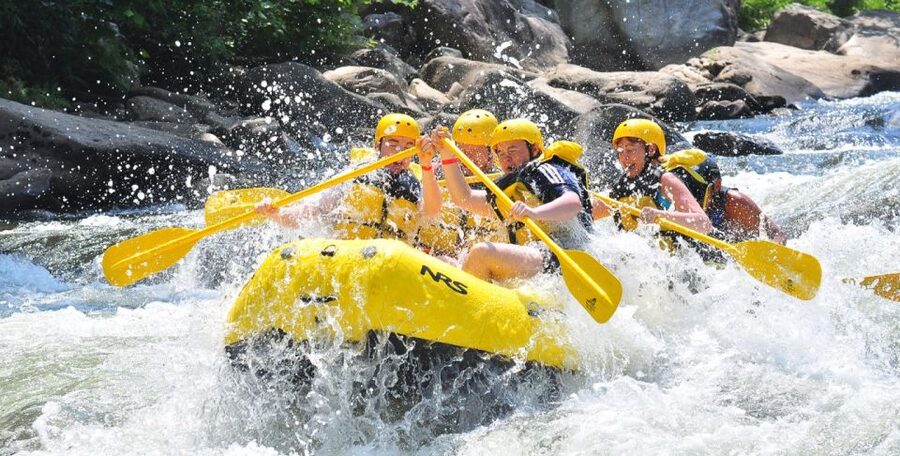
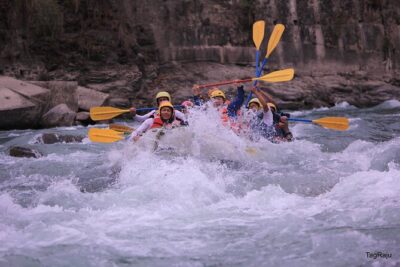
The best part of this day is the Trishuli River’s changing pace. You get calm stretches to take in Nepal’s hills, then a sudden rush of white water, shouted paddle commands, and spray over the raft. The main challenge comes after Majhimtar, before the Upset rapid, rated class 3 to 4 on the Colorado River scale.
I like two things here: transport and equipment are bundled, so you do not need to arrange a separate river transfer, raft, helmet, life jacket, or lunch. I also like the friendly, multilingual crew setup, with licensed English-speaking guides and professional safety kayakers. The main drawback is the timing information. The activity is listed as three hours, but the full day also includes an early road transfer, so confirm the exact pickup and return plan before booking.
Key points at a glance
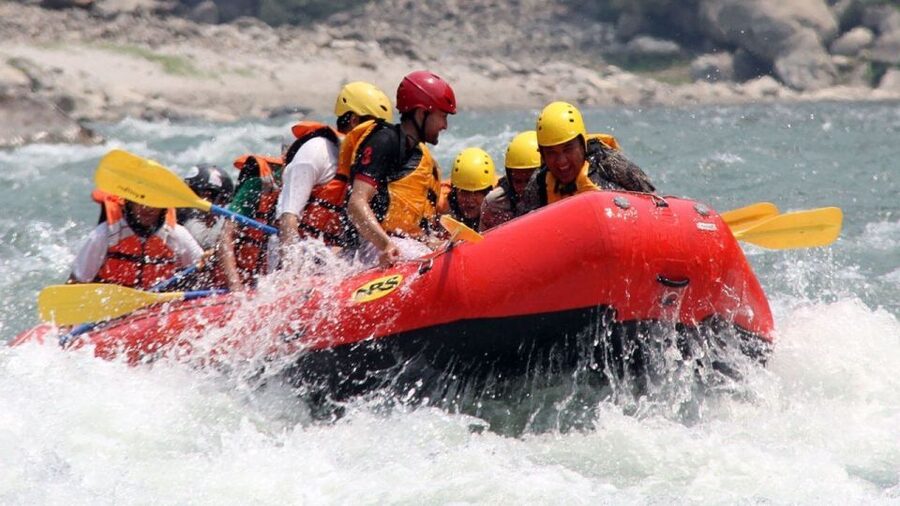
- Class 3 to 4 water near Majhimtar: The Upset rapid is the day’s main test, with smaller and larger rapids before and after it.
- Half-day rafting on the Trishuli: The river action is paired with road transport from several Nepal bases.
- Licensed guides and safety kayakers: The crew gives a safety briefing and speaks English, Nepali, Japanese, and Hindi.
- Riverside lunch before the Upset rapid: You eat on a river beach, then return to the water for more rapids.
- Useful equipment included: Rafts, helmets, life jackets, paddles, dry-top jackets, and a waterproof barrel are provided.
- Best for active visitors: Pregnant women should not book, and everyone should bring a change of clothes and sandals.
Nepal’s Trishuli River gives you a practical introduction to white water rafting without requiring a long expedition. You travel by car, van, or tourist bus to the launch point, meet the rafting crew, receive a safety briefing, and spend part of the day working through rapids.
At $62 per person, the price covers more than the raft ride itself. Land transportation, guides, safety kayakers, equipment, lunch, river permits, first aid supplies, and taxes are included. That makes the cost easier to judge, especially in Nepal, where arranging separate transport to and from a river launch can be awkward.
You should still read the schedule carefully. The on-river activity is listed as three hours, while the full plan begins with an early morning departure and ends with a transfer toward Chitawan, Pokhara, or Kathmandu. The supplied route information also lists pickup options in Chitawan, Pokhara, Lumbini, and Kathmandu, with Chitawan shown as the return point. Ask for the exact route and return destination before you pay.
The morning road trip to the river
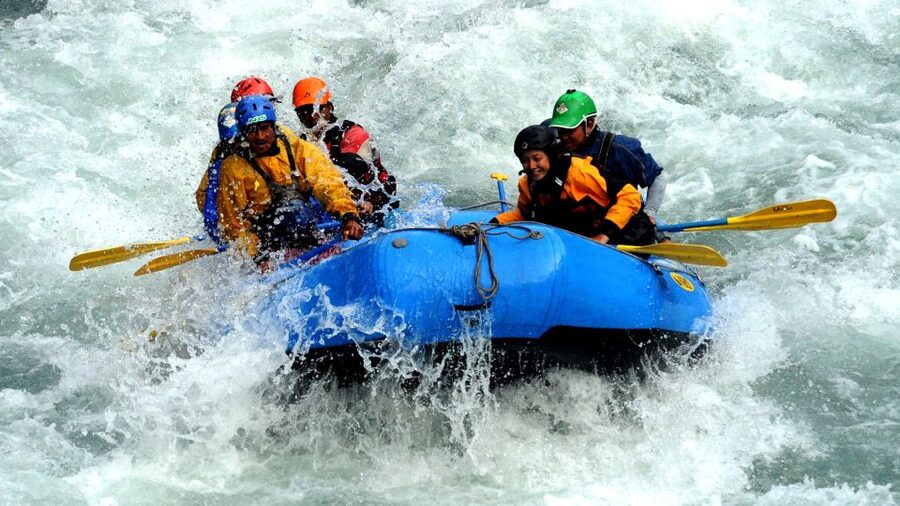
Your day begins early. The operator uses a car, van, or tourist bus, depending on the arrangement, to reach the rafting starting point. The road transfer is not just a minor detail. It shapes the day, so you should be ready for a full outing rather than a short activity that begins immediately after breakfast.
The four listed pickup areas are Chitawan, Pokhara, Lumbini, and Kathmandu. This gives you useful flexibility if rafting is part of a wider Nepal trip. Kathmandu is the obvious choice for visitors based in the capital, while Chitawan can work well if you are combining the river with time around the national park.
The route information is not fully consistent about the ending. One section says you arrive back at Chitawan, while the activity description says you can be transferred to Chitawan National Park, Pokhara, or Kathmandu after rafting. I would treat the transfer as a key booking question. Ask where you will finish, how long the road journey will take, and if your chosen destination is guaranteed.
More white water rafting in Nepal:
- Upper Seti: Half-Day White Water Adventure
★ 5.0 · 87 reviews - Himalayan White Water Rafting Day Trip from Kathmandu
★ 4.0 · 22 reviews - Rotorua Rafting: Kaituna River White Water Rafting & Free Sauna
★ 5.0 · 1,952 reviews
Meeting the crew and learning the safety routine
At the river, you meet the rafting crew and receive a short briefing. The leader explains the safety procedure before you enter the raft. This matters because rafting depends on simple, quick responses. You need to understand paddle commands, how to stay in the boat, and what to do if the raft shifts suddenly.
The crew includes licensed guides and professional safety kayakers. The guides speak English, Nepali, Japanese, and Hindi, which is useful for a mixed group. No individual guide names are provided, so you should not expect to request a particular person in advance.
The equipment list is strong for a half-day run. You receive a self-bailing raft, helmet, life jacket, outfitter plastic paddle, and dry-top jacket. A waterproof barrel is available for a camera and valuables, though I would still keep personal items to a minimum. Toiletries, medication, clothing, cameras, drinks, and other personal items are your responsibility.
A first aid medical kit is carried by the crew. That is a sensible inclusion on a river trip, but it does not replace personal insurance. The operator specifically excludes insurance, so check that your policy covers rafting and adventure activities before departure.
The first rapids and the rhythm of the Trishuli
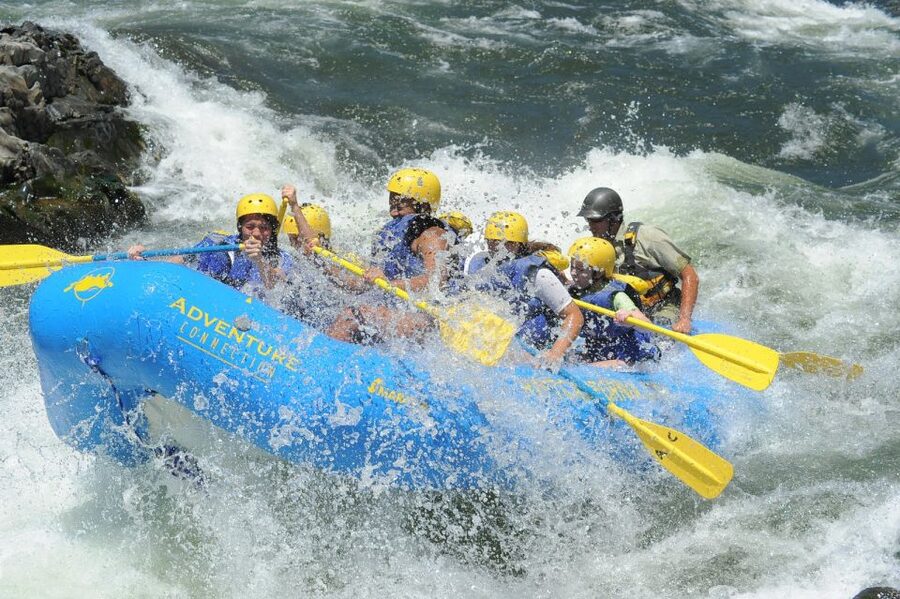
Once on the water, you encounter several small and large rapids during the first half of the run. The experience is not one continuous rush. The river gives you faster sections followed by calmer water, allowing the crew to prepare for the next rapid and giving you time to look around.
The river rapids have Nepali names as well as common names. Your guide tells you those names as you go. That small detail adds a local touch to the trip. Instead of treating the river as a simple obstacle course, you begin to recognize the individual sections and understand that each one has its own character.
I like this balance. You get enough action to make the day exciting, but the pauses help you settle into the raft. If you have never rafted before, those quieter stretches are useful. You can watch how the crew works, get comfortable with the paddle, and listen for instructions before the water speeds up again.
The supplied information does not give a minimum age, group size, or exact launch time. I would ask about all three before booking, especially if you are traveling with children or with people who have never tried rafting.
Majhimtar and the class 3 to 4 Upset rapid
The main feature of the day comes after Majhimtar, shortly before the Upset rapid. The rapid is rated class 3 to 4 on the Colorado River rating scale. That places it above a mild introductory riffle and gives the trip its main shot of serious white water.
The rating is important, but it is not a guarantee of how the river will feel on your date. Water conditions can affect the character of a rapid, and the crew’s briefing remains the best source of practical advice. You should listen carefully and follow the guide’s paddle commands rather than trying to anticipate the river on your own.
The name Upset tells you enough about the mood of this section. It is the point where the trip feels most demanding, and the lunch stop is scheduled just before it. That order is useful. You can eat, gather yourself, and hear more guidance before facing the day’s principal rapid.
I would not choose this trip if you want a completely gentle float. The class 3 to 4 section gives the outing real force. It is also the reason to bring dry clothes and avoid carrying anything loose in the raft.
More river day trips in Nepal:
- 1 Day Trishuli Rafting from Pokhara
★ 5.0 · 4 reviews - 1 Day Rafting Upper Seti River
★ 4.5 · 2 reviews - 1 day Trishuli river rafting
★ 5.0 · 2 reviews - Trishuli River Rafting Day Trip From Kathmandu by Private Car
★ 4.5 · 2 reviews
A river beach lunch before the hardest water
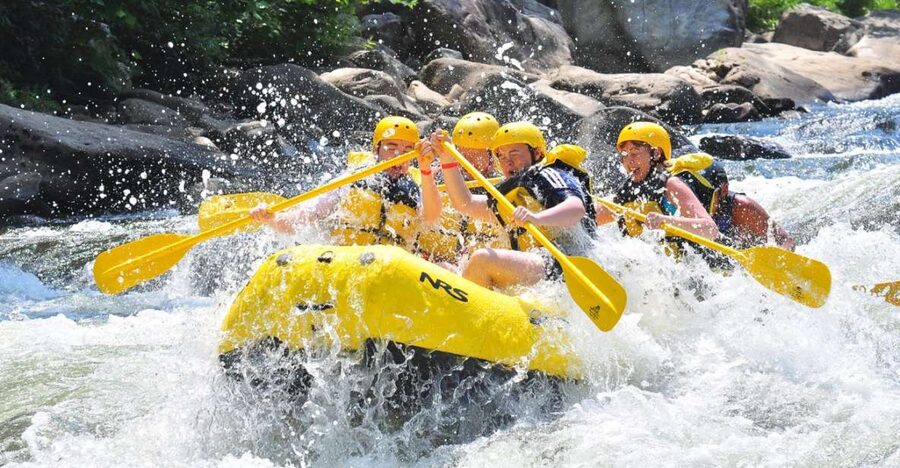
Lunch is served on a beach beside the river, just before the Upset rapid. This is a practical break rather than a restaurant meal, so keep your expectations simple. The value is in the setting and the timing. You eat close to the water, then return to the raft while the main part of the day is still ahead.
Food is included, but drinks are not. Water, soft drinks, alcoholic drinks, snacks, and other personal purchases are specifically excluded. Bring or arrange what you need according to the operator’s instructions, and remember that anything you carry may get wet.
A riverbank lunch also creates a natural pause in a physically active day. You can change your pace, check your belongings, and prepare for the next set of rapids. Since the activity asks you to bring sandals and a change of clothes, pack for wet feet and a damp finish rather than trying to stay perfectly dry.
More rapids after lunch and the takeout point
After lunch, the raft continues through more small and large rapids. The exact number and names are not provided, so the experience can vary with the river and the day’s conditions. You should expect more active paddling after the Upset rapid, not a simple ride straight to the finish.
The crew remains responsible for guiding the raft and managing safety. Professional safety kayakers are included, which gives the river team another layer of support. You still need to take part. Rafting is not a passive boat tour, and the guide will expect you to paddle and respond to instructions.
At the takeout point, the rafting portion ends and you transfer onward. The listed destinations include Chitawan National Park, Pokhara, and Kathmandu. Since the itinerary also names Chitawan as the arrival point, clarify the final transfer before departure. This is especially important if you have a hotel booking, flight, or long-distance bus connection later that day.
What the $62 price really covers
The $62 cost is reasonable if you need transport and equipment as well as the river run. The package includes:
- Land transportation
- Licensed guides and professional safety kayakers
- Self-bailing rafts
- Helmets and life jackets
- Plastic paddles and dry-top jackets
- Waterproof barrel for cameras and valuables
- Lunch
- First aid kit
- River permits
- Government and local taxes
That list removes several common extra costs. You do not need to rent a helmet or life jacket separately, and the permit fees are already handled. The transport is also valuable because reaching a river launch point independently can take more planning than the rafting itself.
The exclusions are ordinary but worth noting. Personal insurance, clothing, medication, toiletries, cameras, drinks, snacks, and personal rafting gear are not included. If you already own rafting equipment, you can bring personal items, but the operator provides the main safety gear.
The booking terms also offer some flexibility. You can cancel up to 24 hours before departure for a full refund, and you can reserve now and pay later. Those policies help if your Nepal plans are still changing, but they do not remove the need to check the weather, river conditions, and final transport details.
Who should book this rafting day?
I would recommend this trip to an active visitor who wants a strong half-day river experience without arranging every detail independently. It suits someone based in Kathmandu, Pokhara, Lumbini, or Chitawan who wants to add white water to a wider Nepal itinerary.
It also suits first-time rafters who want a clear safety briefing, provided equipment, lunch, and a professional crew. The three-hour river duration is long enough to feel worthwhile while remaining manageable for someone who does not want a multi-day rafting journey.
You should think twice if you dislike cold water, wet clothing, physical activity, or sudden changes in pace. The Upset rapid is rated class 3 to 4, and the activity is not suitable for pregnant women. No information is provided about accessibility, age limits, swimming ability, or medical requirements, so ask before booking if any of those points affect you.
What to bring for a less soggy day
The operator asks you to bring a change of clothes and sandals. Take that advice seriously. A dry change of clothes makes the road transfer afterward much more comfortable, and sandals are more practical around the river than delicate shoes.
You may also want to pack personal medication and a small number of essential items. Those are not included, and the waterproof barrel is intended for a camera and valuables, not necessarily for every item you bring.
Avoid treating the river as a place for loose possessions. The raft moves through rapids, paddles are active, and water exposure is part of the plan. Bring only what you need and follow the crew’s instructions about storage.
Should you book the Trishuli rafting day?
Book it if you want a properly equipped, transport-inclusive rafting trip with one notable class 3 to 4 rapid and more manageable white water around it. The friendly crew, multilingual support, safety kayakers, riverside lunch, and included gear make the $62 price good value for an organized day.
Do not book it without clarifying the schedule. The three-hour activity time does not describe the full day, and the listed pickup and drop-off details need confirmation. If you are comfortable with that practical point and want real river action rather than a quiet float, this is a lively addition to a Nepal trip.
FAQ
How long does the rafting activity last?
The listed activity duration is three hours. The full outing also includes early morning transportation to the river and a transfer after rafting, so the total day will be longer.
Where can I be picked up?
Pickup options are listed as Chitawan, Pokhara, Lumbini, and Kathmandu.
Where do I arrive after the trip?
Chitawan is listed as the arrival point. The activity details also mention transfers to Chitawan National Park, Pokhara, or Kathmandu, so confirm your exact return destination before booking.
What river will I raft on?
The activity takes place on the Trishuli River in Nepal.
What is the most challenging rapid?
The main rapid is the Upset rapid, located after Majhimtar. It is rated class 3 to 4 on the Colorado River rating scale.
Is lunch included?
Yes. Lunch is served on a river beach before the Upset rapid.
What equipment is provided?
The operator provides self-bailing rafts, helmets, life jackets, plastic paddles, dry-top jackets, and a waterproof barrel for cameras and valuables.
What should I bring?
Bring a change of clothes and sandals. Personal medication, clothing, cameras, drinks, snacks, insurance, and other personal items are not included.
Just added around Nepal
- 1 Day Trishuli Rafting from Pokhara★ 5.0 · 4 reviews
- Paragliding Trip with River Rafting★ 5.0 · 2 reviews
- 1 Day Rafting Upper Seti River★ 4.5 · 2 reviews
- 1 day Trishuli river rafting★ 5.0 · 2 reviews
- Kathmandu Pokhara & Chitwan Tour with Rafting -8 Days★ 5.0 · 2 reviews
- Trishuli Rafting★ 5.0 · 4 reviews
- A Day Rafting Tour to TRISHULI RIVER★ 3.5 · 3 reviews
- Trishuli River Rafting Day Trip From Kathmandu by Private Car★ 4.5 · 2 reviews
Kathmandu Rafting Tours, compared.
Himalayan White Water Rafting Day Trip from Kathmandu
Read our review →
1 Night 2 Days Trishuli River Rafting Trip From Kathmandu With Private Car
Read our review →
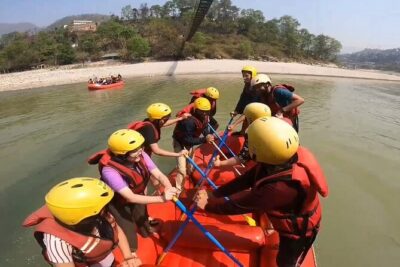
Rafting in Nepal: Trishuli, Bhotekoshi & Other River Rafting
Read our review →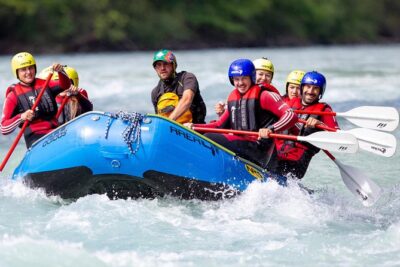
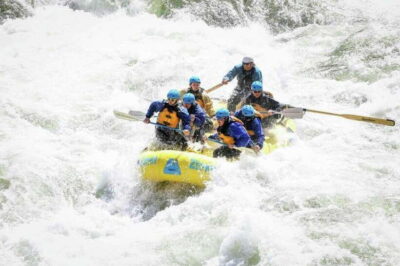
Beginner-Friendly Rafting Adventure on the Trishuli River
Read our review →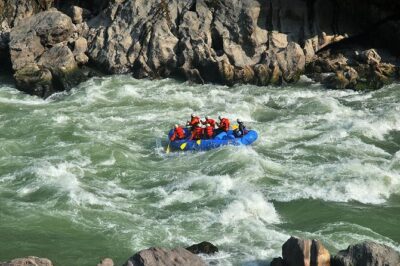
Trishuli River Rafting Day Trip From Kathmandu by Private Car
Read our review →Browse the lists this tour appears in