
REVIEW · ROTORUA
Rangitaiki Rafting Grade 3-4
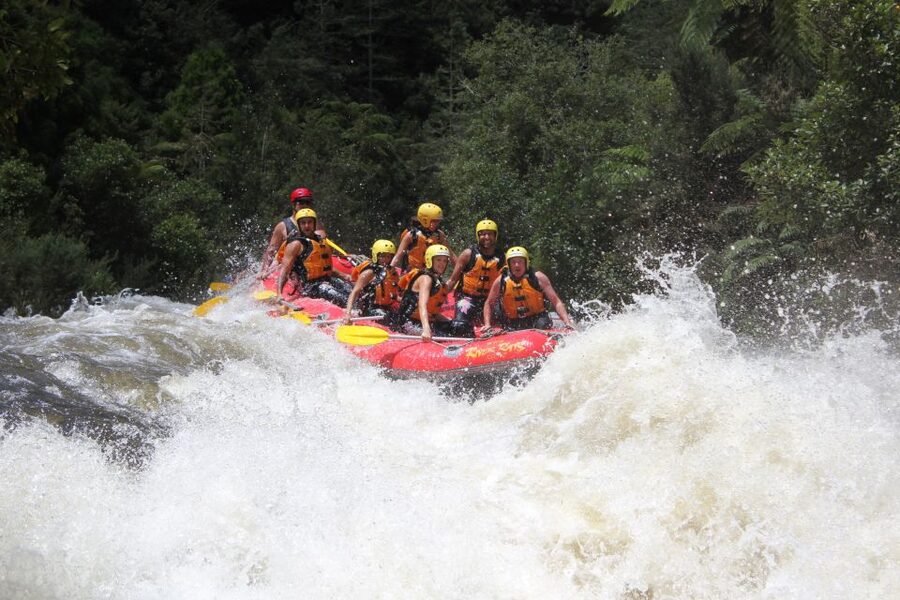
The Rangitaiki River gives you a proper whitewater day without requiring expert skills. You paddle 14 kilometers through a beautiful river valley, with mostly grade 3 rapids and one grade 4 section, including the fast, noisy rush of Geoff’s Joy. I like that you get real teamwork rather than simply sitting in a raft while a guide does everything. I also like the mix of native and plantation forest, which keeps the quieter stretches as interesting as the rapids.
The main consideration is water level. When the river runs low, you may scrape or get stuck on rocks for a moment, as happened on one recent trip. The guides handled those situations well, but the ride can feel less continuous than it would after heavier rain. You should also be comfortable with physical activity, cold water, and following paddle commands quickly.
Key points before you book
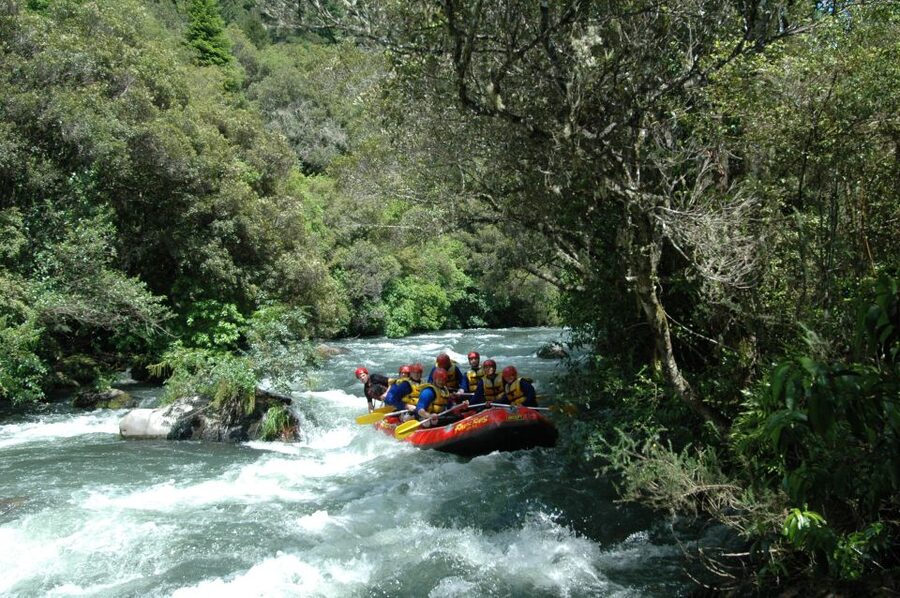
- 14 kilometers of whitewater: The route is mostly grade 3, with one grade 4 rapid for an extra burst of speed.
- Training comes first: You spend 15 to 20 minutes learning paddle and safety commands on flat water.
- A scenic halfway pause: Around 15 minutes of calm water gives you time to chat, enjoy the forest, or swim.
- Good for active beginners: About 80 percent of participants are first-time rafters, but you still need to paddle and move confidently.
- Rotorua pickup is included: Central accommodation transfers leave around 10:30 am for the 11:30 am start at the base.
- Lunch and equipment are covered: You only need swimwear and a towel, though towel hire must be arranged ahead of time.
A six-hour Rangitaiki rafting day
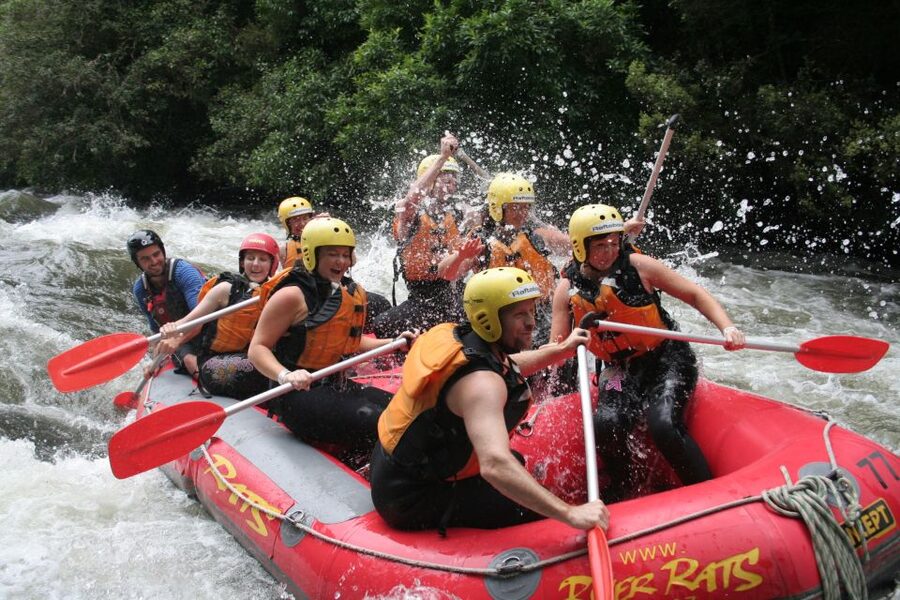
This is a half-day rafting trip once you reach the river base, but you should set aside about six hours from Rotorua and a little longer from Taupo. The total time includes transport, changing, safety preparation, rafting, lunch, and the return journey.
From central Rotorua, pickup is available at about 10:30 am for the 11:30 am base start. The drive takes roughly 45 minutes. From Taupo, allow about an hour of travel time, though the provided pickup information applies to central Rotorua accommodation.
At the base, you will get the specialist equipment needed for the river and take part in a safety briefing. The operation follows strict safety procedures, but rafting remains an adventure sport. You will need to sign a liability waiver and accept that moving water carries some risk.
The trip is run in English. Recent departures have been led by guides including Jason and Brony, along with another member of the River Rats team. The strongest praise has gone to the guides’ calm, professional approach and their ability to build confidence before the raft enters the rapids.
A few more rafting days around Rotorua worth a look
- Rotorua Rafting: Kaituna River White Water Rafting & Free Sauna
★ 5.0 · 1,952 reviews - Rafting Rotorua: Kaituna River White Water Experience
★ 4.9 · 1,274 reviews - Rafting Rotorua Kaituna White Water Rafting | Kaitiaki Adventures
★ 5.0 · 759 reviews
Training on flat water before the rapids
The first 15 to 20 minutes matter more than they may sound. You learn the paddle commands and safety instructions on calm water, where you can practice without a rapid bearing down on you.
That training changes the feel of the trip. Instead of wondering what to do when the raft turns toward a rocky channel, you have already heard the commands and tried the basic movements. You will still need to listen closely, since the guide’s instructions must be followed quickly once the water gets noisy.
This is a team activity. Your raft moves well only when everyone paddles together, so the outing suits people who enjoy taking part rather than watching from the sidelines. You do not need previous rafting experience, and around 80 percent of participants are first-timers. You do need to be physically active and ready to use your arms for repeated stretches.
The training also gives you a useful chance to judge how you feel in the raft. If you are nervous, the calm start lets you settle in before the river becomes faster. If you already feel confident, it gives you a quick refresher on the commands that keep the group moving together.
The first 150 meters and the start of the river run
There is one short walking section near the beginning of the trip. It covers about 150 meters, a small part of the full 14-kilometer route, but it matters for families and anyone with limited mobility.
Children under 13 must be accompanied by an adult and need to manage this walk. Water levels must also be below 7.0 on the gauge for children under 13. The minimum age is 10, so this is not an outing for very young children, even if they are strong swimmers.
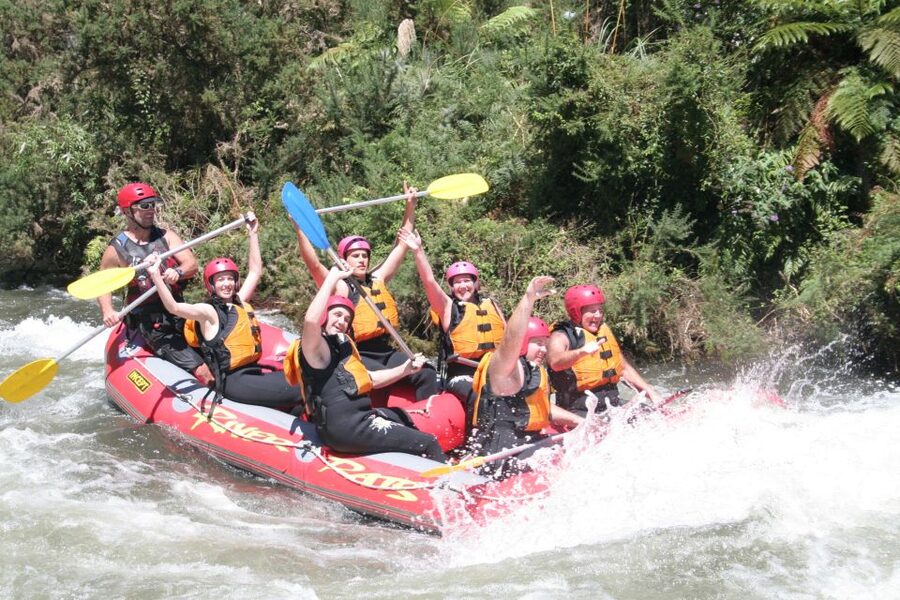
Once you are back in the raft, the river begins with fun, bouncy rapids through the valley. These are not described as one nonstop wall of whitewater. The route mixes active sections with quieter stretches, giving you time to catch your breath and take in the forest.
That rhythm is one of the trip’s strengths. A full run of demanding rapids could leave a beginner tired and overwhelmed. Here, the easier water gives you time to reset, listen to the guide, and enjoy the setting before the next rocky section.
Native forest, plantation trees, and a quiet river valley
The Rangitaiki trip works because the scenery is part of the day, not just something you glimpse between splashes. You move through a river valley lined with both native and plantation forest.
The two types of trees give the route a varied feel. Native forest brings the sense of a wilder New Zealand river setting, while plantation forest shows another side of the region. The views are especially useful during the calmer sections, when you can lift your attention from the paddle and look beyond the raft.
I would not book this solely as a sightseeing trip. The main event is the water, and the most memorable views come when the raft slows down. Still, the forested valley makes the quiet stretches worthwhile and gives the outing a stronger sense of place than a short ride on a purpose-built course.
The setting also helps explain why water level affects the experience. A low river can expose rocks and reduce the speed of some sections. You may find the raft scraping or stopping briefly, then needing help from the guides to move free. That can interrupt the flow, but it also gives you a clear look at how the team manages changing river conditions.
Same river country, a completely different day on the water:
- Rotorua Rafting: Kaituna River Rafting Experience-Free Sauna
★ 4.9 · 401 reviews - Kaituna River White Water Rafting from Rotorua
★ 5.0 · 388 reviews - Kaituna River and Tutea Falls Whitewater Rafting
★ 4.9 · 324 reviews - Rotorua Sledging White Water Sledging | Kaitiaki Adventures
★ 5.0 · 90 reviews
Geoff’s Joy and the grade 4 moment
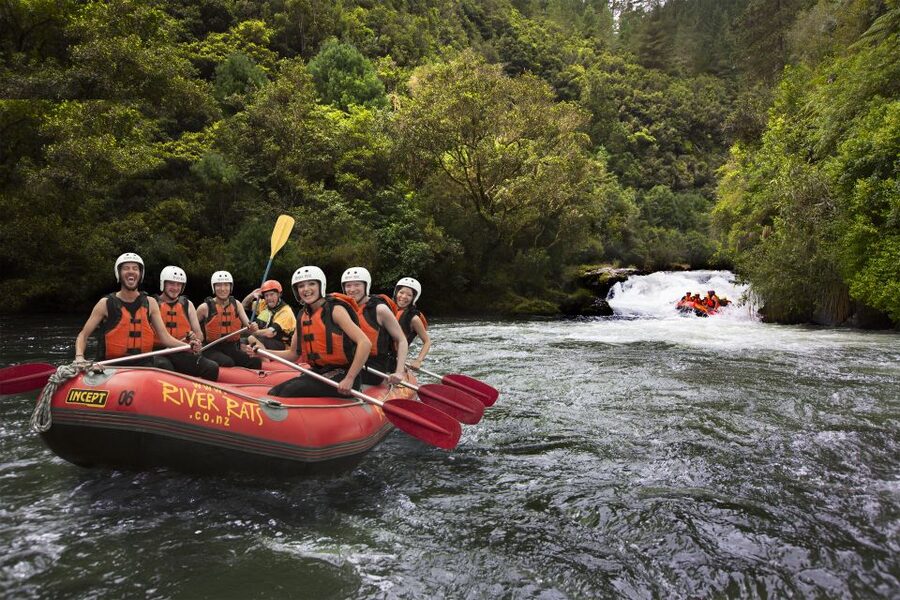
Most of the river is grade 3, which means you can expect active, technical whitewater that requires attention and cooperation. The one grade 4 rapid adds a sharper dose of excitement without making the entire route an expert-level challenge.
Geoff’s Joy is the named rapid to watch for. It is described as a torrent of whitewater, so this is the point where your training and teamwork matter most. Listen to the guide, keep your paddle ready, and stay focused on the command rather than trying to anticipate every movement of the raft.
Grade 3 to 4 is a useful range for an active beginner who wants genuine whitewater. It is not a gentle float, but it is also not presented as a specialist expedition. You should expect to get wet, work hard, and feel the raft move sharply through rocky water.
The balance is important. If you want a quiet scenic float with a few splashes, this trip may be too physical. If you want a demanding expedition with long grade 4 and 5 sections, it may not be intense enough. Its appeal sits between those two options: accessible whitewater with one stronger highlight.
The 15-minute calm stretch
About halfway through the run, the river becomes flat for around 15 minutes. This is the natural pause in the day, and you can use it in several ways.
You can rest your arms, chat with the guide and the other people in your raft, or pay closer attention to the forest. If conditions suit you, you can also have a swim. Bring swimwear even if you are not certain you will enter the water, since you will get wet from the rafting itself.
This quiet stretch also gives the group a chance to regroup. After the first series of rapids, you may appreciate a few minutes without a paddle command. It is a small part of the total trip, but it keeps the six-hour outing from feeling like one long physical test.
The pause does not remove the need for energy later. You still have more river to cover, so I would treat it as a recovery period rather than a full break. Drink when you can and use the time to adjust your clothing or ask the guide questions.
Guides, safety, and the feel of the trip
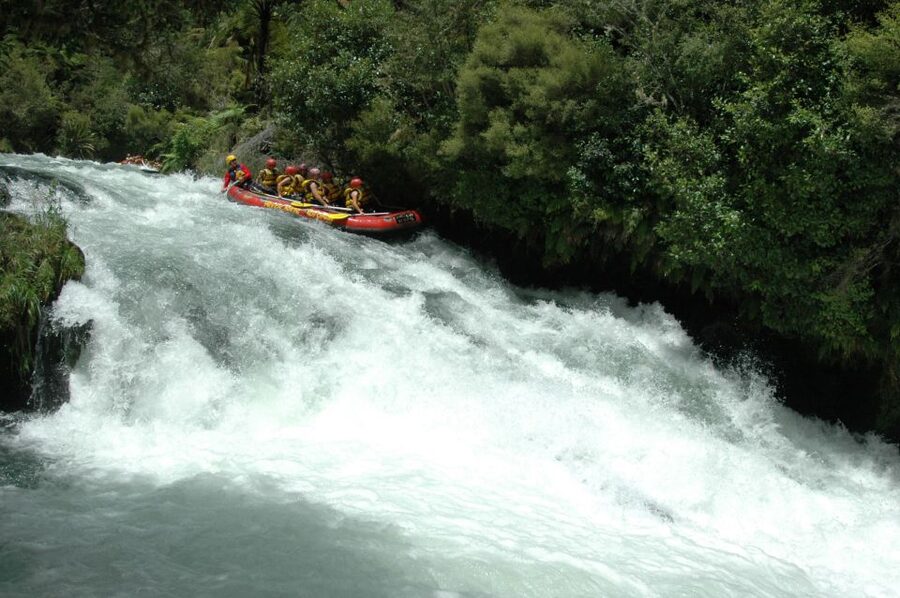
The guides are central to this experience because the river asks you to trust instructions you may not fully understand at first. Jason, Brony, and the wider River Rats team have been described as friendly, professional, and good at building confidence from the start.
That matters most for first-time rafters. A clear briefing can turn nervous anticipation into a practical task: listen, paddle, hold position, and respond. One recent participant noted that communication could be improved, so do not be shy about asking for a command to be repeated if you miss it in the noise.
Safety training and equipment are included. The operation works within strict safety guidelines, but no rafting company can remove every risk from moving water. You should be willing to accept that risk before booking, rather than treating the waiver as a formality.
The guides also have to manage natural river conditions. On a low-water day, a raft may catch on rocks and need assistance. That is not necessarily a sign of poor operation. It is part of the way river rafting changes with water levels, though it can make the trip less smooth.
What the $117 price includes
At $117 per person, the price covers more than time in the raft. You get the specialist equipment, full training, a light lunch, and complimentary transfers from central Rotorua accommodation.
That package makes the cost easier to judge. You do not have to arrange your own transport to a remote river base, rent technical gear separately, or buy lunch during the activity. The included transfer is especially useful if you are staying in Rotorua without a car.
The value depends on what you want from a rafting day. You are paying for roughly 1 hour and 45 minutes on the water, but the outing takes 3.5 to 4 hours at the base, excluding travel. The training, equipment checks, changing time, lunch, and safety work are necessary parts of a proper river operation, even though they are not all spent paddling through rapids.
If you are comparing this with a short rafting ride, the Rangitaiki trip offers a longer route and a fuller day. If you are comparing it with a highly technical river expedition, you are paying for a more approachable grade 3 to 4 run rather than an advanced challenge.
Who should book this rafting trip
I would recommend it to active people who want a first serious whitewater experience. You should be comfortable getting wet, following instructions, helping paddle, and handling a physically busy half-day.
It also suits families with older children, provided each child is at least 10 and the extra rules for anyone under 13 are met. Children under 13 need an accompanying adult, must manage the short walk, and can only go when the gauge is below 7.0.
You should not book if you are pregnant, have a mobility impairment, or weigh more than 125 kilograms, which is about 275 pounds. The recommended minimum weight is 40 kilograms. These limits are practical safety requirements, not minor booking details.
Bring swimwear and a towel. Towel hire is available for a small charge, but you must request it in advance. I would also arrive ready for a wet, active outing rather than expecting a dry scenic cruise.
Booking flexibility and practical timing
You can cancel up to 24 hours before the activity for a full refund. That is useful when your North Island plans are moving around, though river conditions and personal readiness still deserve attention before you confirm.
Check the available starting times when booking. The listed Rotorua pickup is around 10:30 am, with the base start at 11:30 am, but availability can vary.
The trip runs in English, and the guides give the training and safety commands in that language. If you are traveling with someone who does not speak English comfortably, make sure they can understand the instructions before setting out.
Should you book Rangitaiki rafting?
Book this trip if you want a scenic New Zealand river run with real paddling, a strong beginner-friendly structure, and one memorable grade 4 rapid. The included Rotorua transfer, lunch, equipment, and training add solid value to the $117 price.
Think twice if you want guaranteed nonstop whitewater or a completely relaxed float. Low water can mean scraping on rocks, and the route still asks you to work as part of a team.
For most active visitors based in Rotorua, I see this as a well-balanced choice: more exciting than a tame river ride, less intimidating than an advanced rafting expedition, and scenic enough to make the calmer minutes count.
FAQ
How long does the Rangitaiki rafting experience take?
The full activity lasts about six hours, including travel and the other parts of the day. Time on the water is about 1 hour and 45 minutes, while the base portion takes roughly 3.5 to 4 hours excluding travel.
How much time do I spend on the river?
You spend approximately 1 hour and 45 minutes on the water, covering about 14 kilometers of the Rangitaiki River.
What grade are the rapids?
The trip is mostly grade 3, with one grade 4 rapid. Geoff’s Joy is the named torrent of whitewater on the route.
Do I need previous rafting experience?
No. About 80 percent of participants are first-time rafters. You do need to be physically active and able to follow paddle and safety commands.
Is training included?
Yes. You receive 15 to 20 minutes of training before the trip, including paddle and safety commands. Practice takes place on flat water before you enter the rapids.
What should I bring?
Bring swimwear and a towel. Towel hire is available for a small charge, but it must be requested in advance.
Can children take part?
The minimum age is 10. Children under 13 must be accompanied by an adult, able to walk the approximately 150-meter section near the start, and traveling when water levels are below 7.0 on the gauge.
Is transport from Rotorua included?
Complimentary pickup is available from central Rotorua accommodation. Pickup is around 10:30 am for an 11:30 am start at the base, and travel from Rotorua takes about 45 minutes.
Just added around Rotorua
- Rotorua: Tarawera River Raft and Kayak Adventure★ 5.0 · 2 reviews
- Rotorua: Kaituna Rafting & Mt. Tarawera Guided Hike Combo★ 4.5 · 11 reviews
- Rangitaiki Rafting Grade 2★ 4.8 · 6 reviews
- Rotorua Sledging: Kaituna White Water River Board Experience★ 4.8 · 36 reviews
- Kaituna River Rafting Grade 5★ 4.9 · 36 reviews
- Rotorua Sledging White Water Sledging | Kaitiaki Adventures★ 5.0 · 90 reviews
- Kaituna River and Tutea Falls Whitewater Rafting★ 4.9 · 324 reviews
- Rotorua Rafting: Kaituna River Rafting Experience-Free Sauna★ 4.9 · 401 reviews
Rotorua Rafting Tours, compared.
Rotorua Rafting: Kaituna River White Water Rafting & Free Sauna
Read our review →
Rafting Rotorua: Kaituna River White Water Experience
Read our review →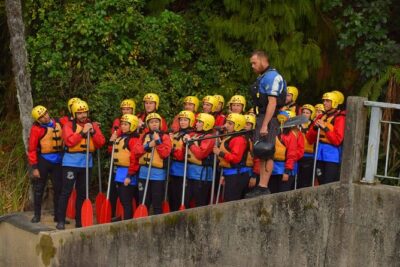
Rafting Rotorua Kaituna White Water Rafting | Kaitiaki Adventures
Read our review →
Rotorua Rafting: Kaituna River Rafting Experience-Free Sauna
Read our review →
Kaituna River and Tutea Falls Whitewater Rafting
Read our review →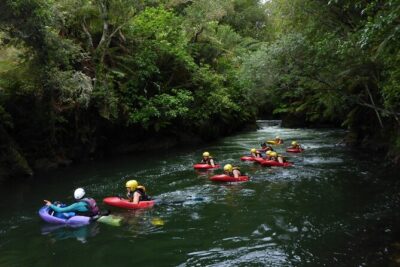
Rotorua Sledging White Water Sledging | Kaitiaki Adventures
Read our review →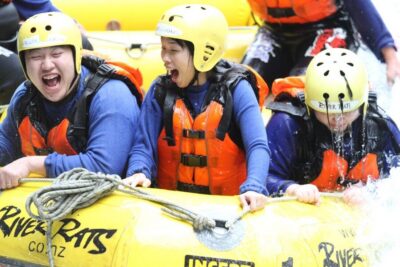
Browse the lists this tour appears in