REVIEW · USA
5 Day Main Salmon Rafting Tour with Meals Included
The best part of this five-day Main Salmon trip is the mix of whitewater and slow river time. You get thrilling rapids, mountain views, hot-spring hikes, old river history, wildlife, and sandy campsites instead of one long push through the water. Guides including Jack, Jenna, Scott, Lora, and Eric help keep the days organized and lively.
I like the strong family appeal. Children as young as 9 have enjoyed the trip, while adults in their 60s have found plenty to do. I also like the care put into camp life, with three meals a day, fresh lemonade, desserts, games, songs, and optional ways to get more active, including duckie boats and personal packrafts.
The main consideration is the pace. Days two through four can last about 12 hours, and you need a moderate level of fitness for rafting, hiking, boarding, and camp tasks. July can also be hot, so pack for sun and warm days rather than assuming a mountain river trip will stay cool.
Main points to know before booking
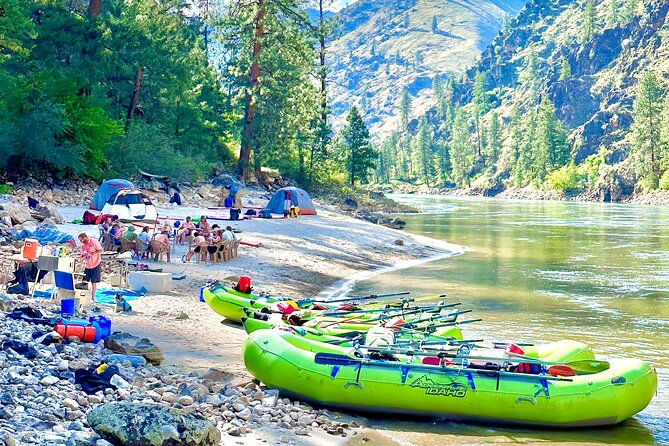
- Five days on the Main Salmon: Travel from Corn Creek near Shoup to Carey Creek near Riggins through Idaho’s Frank Church River of No Return Wilderness.
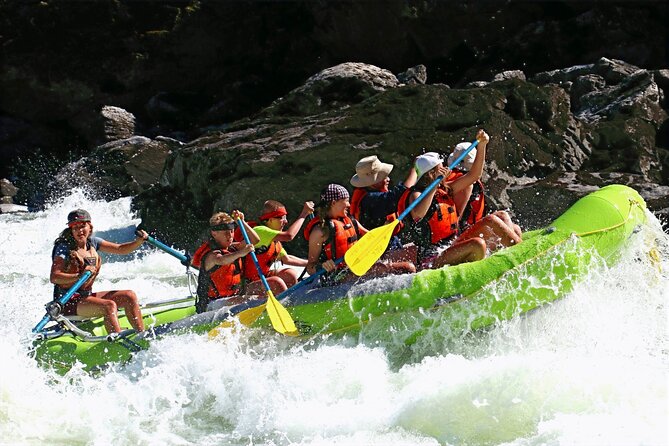
- Rapids plus real downtime: The days combine active whitewater with swimming, sandy camps, hikes, historic stops, and quiet stretches beneath high peaks.
- Guides shape the trip: Jack, Jenna, Scott, Lora, and Eric are praised for safety, organization, cooking, storytelling, and helping different ages enjoy the same river.
- Three meals each day: Expect hearty camp cooking, including salmon, ribeye steak, fajitas, peach cobbler, pineapple upside-down cake, watermelon, and cinnamon hot cocoa.
- A family-friendly challenge: The trip has worked well for groups ranging from children age 9 to adults over 60, but a moderate fitness level is still required.
- Plan the car shuttle early: The start and finish are far apart. Driving between Corn Creek and Carey Creek takes about 10 hours one way around the wilderness.
Five days from Corn Creek to Carey Creek
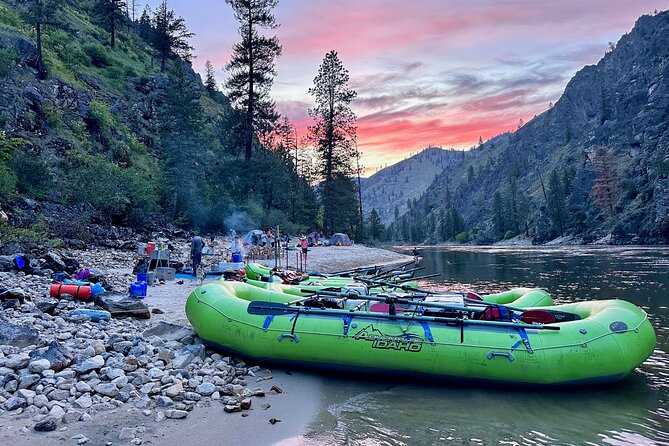
This is not a quick scenic float. You meet at 9:00 a.m. at Corn Creek River Access Site on Salmon River Road near Shoup, Idaho, then spend five days moving down the Main Salmon River. The trip ends at Carey Creek Boat Ramp near Riggins.
That distance matters. The river does the work of connecting two remote parts of Idaho, but your car cannot easily follow. The operator recommends using Frank Church River Shuttles to move your vehicle to Carey Creek. You should deal with that before arrival, since the road trip around the wilderness takes roughly 10 hours one way.
The group size can reach 25 people. That is large enough for a social camp atmosphere, but small enough for the guides to pay attention to the group. It also means you should expect shared meals, shared camp routines, and a mix of activity levels.
The price is $2,600 per person. That is a serious amount of money, but it covers a rare five-day wilderness experience rather than a short commercial rafting outing. The value improves if you plan to take advantage of the included meals, hikes, camp activities, historical stops, and different boats. You are paying for guides, river logistics, food, safety, and access to a remote stretch of Idaho that is difficult to reach independently.
A few more rafting days around the USA worth a look
- 5 Days & 4 Nights Whitewater Rafting Victoria Falls
★ 5.0 · 18 reviews - Zambezi River Whitewater Rafting 5 Days 4 Nights(Multi day Trip)
★ 5.0 · 6 reviews
Day one: entering the Frank Church wilderness
The first day lasts about eight hours and introduces you to the Frank Church River of No Return Wilderness Area. This is your transition from roads and schedules to river time.
The setting is the main attraction. You begin in a large protected wilderness, where the river becomes your route through the mountains. The first day gives you time to learn how the raft works, settle into the group, and get used to the rhythm of moving water and riverside stops.
Do not expect every minute to be packed with named attractions. The value of this day is the change in pace. You are leaving behind ordinary transport and beginning a trip built around the river, the canyon walls, and the camp at the end of the day.
The guides matter from the start. Jack, Jenna, Scott, and Lora are known for keeping groups engaged while handling the practical work of rowing, loading, cooking, and camp setup. That combination is useful when some people want more action and others need a gentler first day.
Day two: rapids, hot springs, and a long river day
Day two is listed at about 12 hours, making it one of the fullest days on the trip. You travel along the Salmon River Scenic Byway area, run exciting rapids, and hike to a hot spring with a view.
That combination gives the day a good shape. The rapids provide the adrenaline, while the hike gives you a chance to stretch your legs and see the river from another angle. A hot spring stop is especially welcome after hours on the water, though the length of the day means you should pace yourself.
The exact amount of effort depends on water conditions and the group, but this is not a passive sightseeing ride. You should be ready to climb in and out of boats, walk on uneven ground, and spend much of the day outside. Wear footwear you can use both around camp and on a hike.
The hot spring stop also shows why this trip offers more than a standard raft ride. You are not simply racing from launch point to takeout. The river is a base for side trips, natural features, and small discoveries that would be easy to miss from a road.
Day three: museum stories and serious whitewater
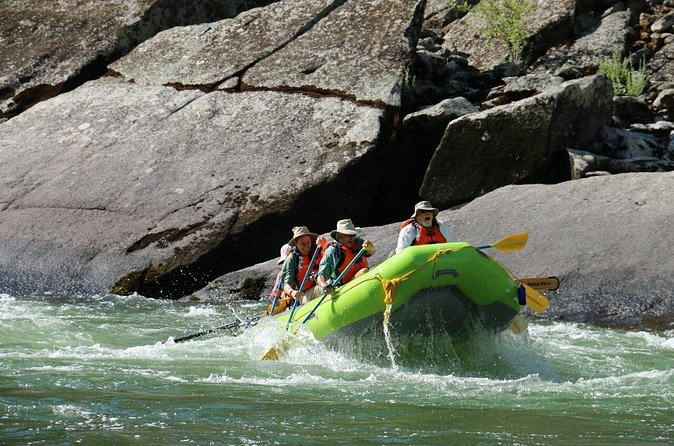
Day three returns to the Frank Church River of No Return Wilderness Area and combines a mountain man museum with more rapids. Like day two, it lasts about 12 hours.
The museum adds useful context to the scenery. The canyon is not empty wilderness in the sense of having no human story. Historic sites and old river routes help you understand how people lived, traveled, and worked in this difficult country.
The rapids are the physical highlight. You can expect the guides to give direction and manage the raft through the rougher water, but you still need to listen carefully and take part. This is one reason the moderate fitness requirement matters. Rafting involves more than sitting and admiring the view.
This is also a good day to try a different way of moving through the river if conditions and group arrangements allow. The experience includes duckie boats, and one person was able to paddle a personal packraft. Those options can make the trip feel more active, but they may not suit everyone. If you prefer the larger raft, you can still enjoy the rapids without needing to paddle your own small craft.
Same river country, a completely different day on the water:
- Half Day Whitewater Rafting Trip
★ 5.0 · 1,840 reviews - Upper Pigeon River Rafting Trip from Hartford
★ 5.0 · 1,444 reviews - Tetons and Snake River Scenic Float Trip In Jackson Hole
★ 5.0 · 1,000 reviews - Half-Day Whitewater Rafting in Browns Canyon
★ 5.0 · 999 reviews
Day four: high peaks, streams, and historic places
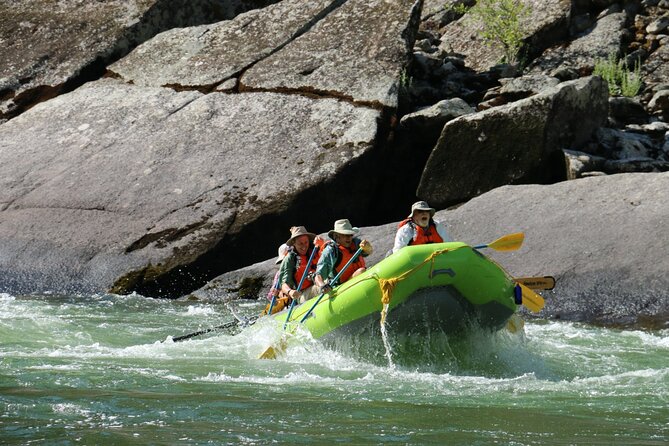
Day four follows the Salmon River past towering peaks and mountain streams, with stops at historic sites. It is another 12-hour day, so the river scenery is likely to fill most of your waking hours.
I like this day for the contrast between movement and observation. The raft carries you through a broad natural setting, while side stops let you pause and look more closely. Small streams, high slopes, and historic places give the day variety without requiring a packed schedule of formal attractions.
The river can feel generous here because the boat does not force you to rush. You have time to watch changing light on the mountains, notice wildlife, and talk with the people in your group. That slower rhythm is one of the strongest reasons to choose five days instead of a shorter rafting trip.
The guides also add a social layer. Camp games, swimming challenges, songs, and a raft slippery slide have been part of the experience. These extras may sound simple, but they matter on a multi-day trip. They give children something to anticipate and help adults relax after a long day on the water.
Day five: a sandy camp and the return to roads
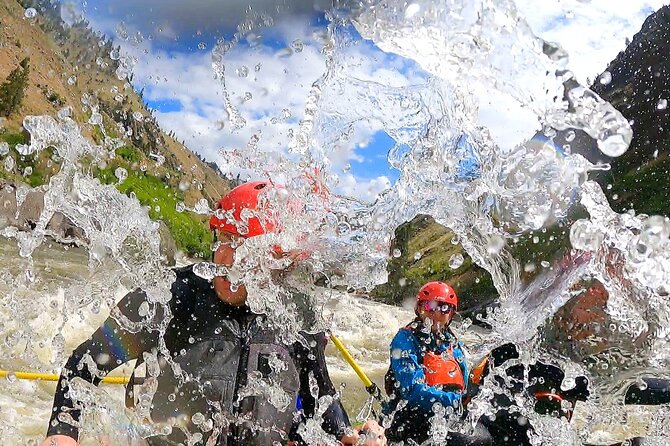
The final morning begins at a sandy campsite near Riggins. The listed activity time is about two hours, so this is a short closing stretch compared with the long middle days.
There is something fitting about waking beside the river before returning to ordinary transport. You have spent several days sleeping near the water, eating outdoors, and letting the river set the schedule. The final morning gives you a quiet last look before the trip ends at Carey Creek Boat Ramp.
Riggins is the practical finish point. From there, you reconnect with roads and your vehicle. If you arrange a car drop in advance, the end of the trip should be much simpler. If not, you need a clear plan for getting back to your car.
Why the guides are central to the experience
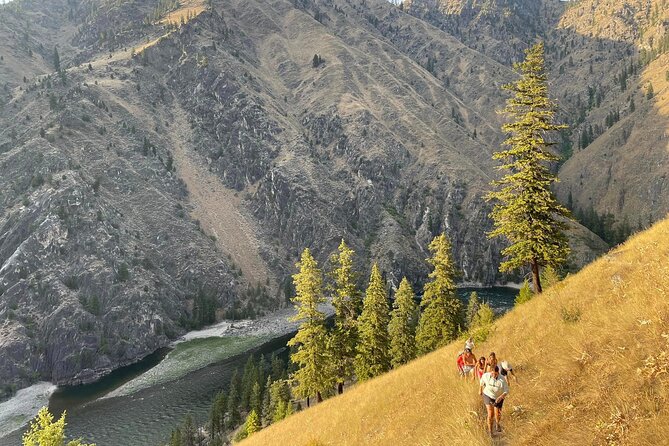
On a five-day raft trip, guides do far more than steer through rapids. They row, navigate, haul equipment, set up camp, cook, serve meals, clean up, and help the group move safely from one stop to the next.
The guide team named for this experience includes Jack, Jenna, Scott, Lora, and Eric. Their roles appear to reach well beyond river technique. They lead hikes, share nature and history stories, organize games, and pay attention to different personalities in the group.
That matters most in a mixed-age party. A 9-year-old may want action all day, while an older family member may prefer a scenic float and a quiet camp. Good group management can make those preferences fit together. This trip has a strong record of doing that, but no guide can remove the basic demands of a long wilderness outing.
The food is another large part of the guides’ work. Meals have included salmon, ribeye steak, fajitas, watermelon, fresh lemonade, peach cobbler, pineapple upside-down cake, and cinnamon hot cocoa. You should not assume a wilderness trip means plain food from a packet.
Coffee deserves special attention. If your morning depends on a particular brew, bring high-quality instant coffee. That small item can make a big difference when you are waking early at a riverside camp.
What camp life is really like
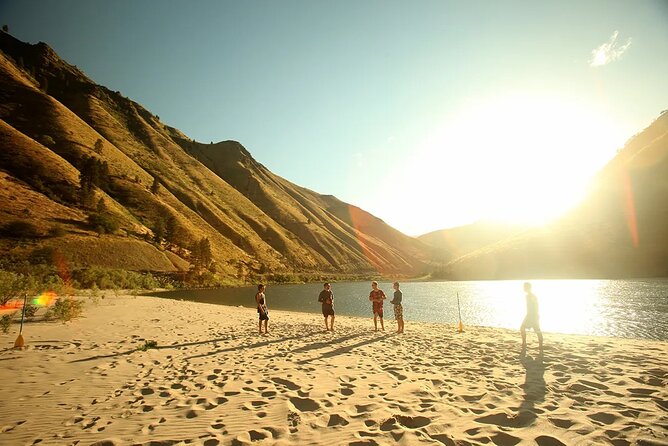
Camp is not just a place to sleep. It becomes the evening program, dining room, social center, and viewpoint.
You might play games, join a song, take part in a swimming challenge, or sit beneath the stars. One memorable detail from the trip is the chance to count shooting stars before falling asleep. Another is gathering fresh mint for lemonade. These are modest moments, but they are exactly what makes a river trip feel distinct from a resort stay.
The camps are sandy, and the setting is outdoors. That means comfort depends partly on your attitude and partly on your packing. Keep your gear organized, expect dust, and do not bring a large pile of warm layers for midsummer. July can be hotter than expected, and heavy clothing may spend the whole trip at the bottom of your bag.
Private bathroom arrangements are not described in detail, but the camp setup includes riverside bathroom stops. The setting is part of the experience, not a hotel-style amenity. If privacy and facilities are your top concern, this may not be the right kind of holiday.
Family appeal, fitness, and group size
This trip can work beautifully for a family reunion or a mixed-age group. The range from age 9 to 60-plus shows that you do not need to be a lifelong whitewater athlete to take part.
You do need moderate physical fitness. Expect long outdoor days, time in boats, hikes, getting in and out of rafts, and participation in camp routines. You should be comfortable being away from normal facilities for several days.
A group of up to 25 people also affects the mood. You will meet different personalities and activity preferences. That can be a benefit if you enjoy company, but less so if you want a private trip built around your own schedule.
The best fit is someone who likes a blend of excitement and togetherness. You should enjoy being active, eating with a group, listening to stories, and letting the guides shape the day. If you want to spend five days entirely alone with one small party, ask about group size before booking.
Price, practical planning, and cancellation terms
At $2,600 per person, this is not a budget activity. Still, the price includes a five-day river experience with meals, guides, camp support, side trips, historic stops, and access to a remote wilderness route.
I would compare it with the cost of arranging food, boats, safety equipment, transport, and permits on your own. The guided option also removes much of the technical burden. You can focus on the river instead of managing every meal, load, route decision, and camp task.
The start time is 9:00 a.m. at Corn Creek River Access Site, Salmon River Road, Shoup, Idaho. The finish is Carey Creek Boat Ramp near Riggins. Because the start and end are separated by a long drive, car transport is one of the first details to solve.
The experience is offered in English and can take a maximum of 25 people. Confirmation is provided at booking. You can cancel up to 24 hours before the start for a full refund. Changes made less than 24 hours before the start are not accepted, and poor weather or an insufficient minimum group can lead to a rescheduled trip or full refund.
Should you book the Main Salmon rafting trip?
Book this trip if you want real river time, not just a few hours of whitewater. It is a strong choice for families, active friends, and first-time multi-day rafters who want guides to handle the hard work while still offering hikes, duckies, packraft options, history, and camp fun.
Think twice if you dislike long days, shared camps, hot weather, or basic outdoor facilities. The $2,600 price also demands commitment, and the car shuttle adds planning.
For the right person, the appeal is clear: five days of rapids, canyon scenery, riverside meals, stars, hot springs, old stories, and a guide team that helps turn a demanding trip into a welcoming one. That is a worthwhile trade for giving up some comfort and control.
FAQ
How long is the Main Salmon rafting experience?
The experience lasts approximately five days.
Where does the rafting trip start?
It starts at Corn Creek River Access Site on Salmon River Road near Shoup, Idaho.
Where does the trip end?
The trip ends at Carey Creek Boat Ramp near Riggins, Idaho.
What time does the trip start?
The listed start time is 9:00 a.m.
How much does the tour cost?
The price is $2,600 per person.
Are meals included?
Yes. Meals are included, and the camp team prepares three meals each day.
What kind of food is served?
Meals have included salmon, ribeye steak, fajitas, watermelon, fresh lemonade, peach cobbler, pineapple upside-down cake, and cinnamon hot cocoa.
How many people can join the trip?
The maximum group size is 25 people.
What fitness level is required?
You should have a moderate level of physical fitness.
Can I cancel for a refund?
Yes. You can cancel at least 24 hours before the start time for a full refund. If poor weather or an insufficient minimum group causes the operator to cancel, you will be offered another date or experience, or a full refund.
Just added around the USA
- Wilderness: Denali National Park Class I-III Rafting Tour★ 4.5 · 25 reviews
- Westwater Canyon: Colorado River Class 3-4 Rafting from Moab★ 4.8 · 22 reviews
- Valdez: Keystone Canyon Whitewater Rafting Trip★ 4.8 · 6 reviews
- New River Gorge Whitewater Rafting, WV – Lower New Full Day★ 5.0 · 18 reviews
- Half Day New River Gorge Whitewater Rafting★ 5.0 · 22 reviews
- Full Day Fall Lower Gauley Rafting in West Virginia★ 5.0 · 2 reviews
- Extreme Class V Whitewater Rafting on the Gauley River WV (Fall Only)★ 5.0 · 10 reviews
- Lower Gauley Fall Rafting Special in WV★ 5.0 · 32 reviews
the USA Rafting Tours, compared.
Upper Pigeon River Rafting Trip from Hartford
Read our review →
Tetons and Snake River Scenic Float Trip In Jackson Hole
Read our review →
Whitewater Rafting in Jackson Hole : Family Standard Raft
Read our review →
Durango Half Day Rafting Trip – Lower Animas River
Read our review →
Snake River Scenic Float Trip with Teton Views in Jackson Hole
Read our review →